Gameplay Systems
How to Play MECCHA CHAMELEON: A Complete Guide to Gameplay Systems and Camouflage Mechanics
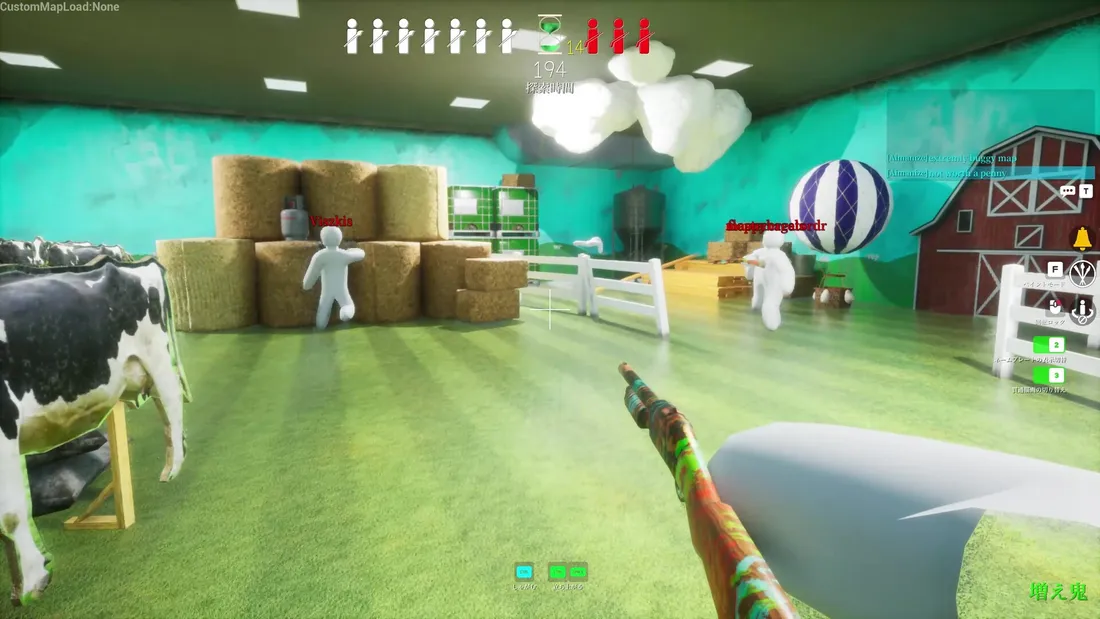
MECCHA CHAMELEON (the original Japanese title is めっちゃカメレオン; note that "Meccha" is a Kansai dialect term for "super" or "very") is a 2026 breakout hit in the multiplayer hide-and-seek party game genre. If you're new to the game, think of it as "hide-and-seek with a creative twist": you control a squishy, pure-white bipedal chameleon and use the in-game color palette to paint your body to match walls, floor tiles, or props, blending into the environment before the Seeker hunts everyone down within the time limit. This page covers everything you need to know about playing MECCHA CHAMELEON, from the flow of a match, the camouflage and color palette mechanics, the eyedropper tool, and the pose system, to the Seeker's perspective, game modes, and ranking. For practical color schemes and hiding spots, head over to Hiding and Camouflage Tips; to learn how to hunt, check out our Seeker Guide.
On This Page
- The Flow of a Match: Teams, Preparation, Seeking, and the Results Screen
- Camouflage: The Core Mechanic
- Color Palette and the Spoid Tool: How to Match Colors Quickly
- Pose System: Pose First, Paint Second
- Seeker Mechanics: First-Person, No Flashlight, Shoot to Eliminate
- Three Game Modes: Normal, Increasing, and Double
- Scoring and Ranking: The Longer You Stay Under the Seeker's Nose, the Higher Your Score
- How It Differs from Prop Hunt: Humanoid Form, Almost No Items
- Frequently Asked Questions
The Flow of a Match: Teams, Preparation, Seeking, and the Results Screen
MECCHA CHAMELEON is a standard round-based competitive game. At the start of each match, players in the room are divided into two sides: the larger group of Hiders (chameleons) and the smaller group of Seekers (Oni / Hunters). The rhythm of a match can be broken down into four stages; understanding this flow will help you know exactly what to do at every second.
- Team Assignment: The system assigns roles based on the current mode. In modes like Infection, these roles may change during the match (explained below).
- Preparation Phase: Hiders are placed into the map to move freely, choose a hiding spot, paint their bodies, and lock in a pose. During this time, Seekers are confined to the spawn point and cannot see the map, giving Hiders time to set up.
- Seeking Phase: Once the preparation time ends, Seekers are released and must find and "hit" all Hiders within the time limit.
- Results Screen: After the timer runs out, the results screen reveals the hiding spot and camouflage of every Hider. According to media reports and community players, this is often the funniest part of the match—seeing someone who painted themselves as a banana or a balloon slumped in a corner never fails to get a laugh.
It is worth noting that the developer has not officially announced the exact duration of the preparation and seeking phases, and these likely vary based on the mode and host settings. Following the conventions of the Prop Hunt genre, the preparation phase is usually only a few dozen seconds—enough time to choose a spot and apply a base coat, but not enough for fine detail, so efficiency is key: pick a spot, pose, then paint. The total match duration is configured by the host, and the match ends when the Seekers find everyone or the timer hits zero. Maps and modes are selected by the host in the lobby; see Maps and Environments for details.
Camouflage: The Core Mechanic
Camouflage is the soul of MECCHA CHAMELEON, setting it apart from all traditional hide-and-seek games. Your chameleon starts as a blank white canvas. In the preparation phase, you open the painting menu to manually color different parts of your body to match nearby walls, floors, paintings, or props. This isn't about picking a skin from a preset list; it's true freehand painting: you can match the patterns of floor tiles, replicate wall textures, or flatten your body against a wall to mimic a hanging picture or a sign.
This means every disguise is unique, and success depends entirely on your eye for detail and speed. The official Steam store page for MECCHA CHAMELEON summarizes the three keys to victory as "the hiding spot, the pose, and above all, your artistic skills." In other words, whether your colors are accurate, your shading is correct, and your silhouette matches is more important than which corner you hide in.
Two fundamental tips for beginners: First, don't just use a single flat color. Real surfaces have lit areas and shadows; a single flat color is the most obvious giveaway to a Seeker. Second, color accuracy is more important than fine lines. According to media reviews, early versions lacked brush size options and had limited painting resolution, so rather than obsessing over fine details, focus on getting the main color blocks right. Specific layering techniques and practical tips for matching surfaces are covered in Hiding and Camouflage Tips.
Color Palette and the Spoid Tool: How to Match Colors Quickly
The core of the painting process is the palette UI. It is confirmed by the developer and the wiki that the painting interface provides a color wheel and RGB values, allowing you to drag intuitively or lock in a precise color using red, green, and blue values. Additionally, some media reviews have mentioned the availability of HSV (Hue / Saturation / Value) sliders.
Beyond that, community guides describe more advanced features: saveable color palettes/themes, and a set of metallic/roughness (gloss) sliders used to control how the surface of your body reflects light. Please note that the gloss slider is a feature widely discussed by the community, but its exact implementation has not been officially confirmed by the developer or major media. Even so, the concept that "gloss must match the environment" holds true: if you stick a shiny body onto a matte wall, you will be spotted immediately, no matter how accurate the color is. This is the most common mistake beginners make.
The key tool for speeding up your color matching is the confirmed eyedropper tool, or "Spoid." It is a 3D color-picking tool that allows you to pick the exact color directly from the walls, floors, or props around you. Japanese media described it as "picking colors from the surroundings with the Spoid," and it is often compared to the eyedropper in Photoshop. The standard practice in-game is: use the Spoid to pick the base color of the surface, then pick a darker shadow color, fill in the large areas, and finally add texture. However, PC Gamer's review noted that the tool can be "a bit finicky" and sometimes difficult to use, which may limit what you can imitate in the time allowed, so don't bet all your time on one perfect color pick.
Pose System: Pose First, Paint Second
Getting the color right isn't enough, because your chameleon is a bipedal humanoid, and that upright silhouette will give you away. The pose system is designed to break up your humanoid silhouette, allowing your body to blend into the scene at a structural level.
According to media reports and community guides, known poses include: curling into a ball (e.g., to pretend to be a balloon or a round object), crouching, lying flat, and flattening against a wall (to mimic a painting or a sign). The wall-flattening pose has a dedicated "unstick" button to help you readjust. The v1.2.0 update added 2 new poses. The total number of poses has not been officially announced, but it is confirmed that the count continues to grow.
There is an important order to your workflow: pose first, then paint. The reason is simple: once you change your pose, the surfaces facing the camera and the parts of your body that are stretched or compressed will change. You are essentially painting the "surfaces visible to the Seeker in your current pose." If you paint first and then pose, the colors and shading will likely be misaligned. When choosing a pose, try to match your silhouette to nearby objects: curl into a ball to look like a balloon, or flatten against a wall to look like a sign. For more on choosing poses and matching silhouettes, see Hiding Tips.
Seeker Mechanics: First-Person, No Flashlight, Shoot to Eliminate
When playing as a Seeker (Oni / Hunter), the gameplay is entirely different. Seekers search the map in first-person view. There is no flashlight; you must rely entirely on your eyes to spot inconsistencies in the camouflage. Once you find a target, shoot them with your gun to eliminate them. The developer stated, "Players who are found will be out if shot with a gun."
Because there is no flashlight to assist you, what Seekers really need to train is their "eye for detail." Even the best camouflage often gives itself away in these areas:
- Spacing and Symmetry: An object that shouldn't be there, or an extra object in a symmetrical row.
- Gloss and Shadows: The reflections or shadows on the body don't match the surrounding material.
- Edges: The boundaries of the color blocks are too clean, too regular, or don't align with the background texture.
- "Too Centered / Too Clean": Objects placed perfectly in the center of a room or looking too pristine are often players.
The correct strategy for a Seeker is to systematically clear areas, checking along wall edges, rather than running around aimlessly. The results screen at the end of each match is the best learning tool for Seekers; remember high-frequency hiding spots, and your efficiency will increase in the next round. A complete guide to seeking strategies and a checklist of what to look for can be found in the Seeker Guide.
Three Game Modes: Normal, Increasing, and Double
In addition to selecting a map, the host must choose a mode in the lobby. MECCHA CHAMELEON currently has three confirmed modes; the original Japanese names are provided below for reference against your UI.
| Mode | Japanese / English | How to Play |
|---|---|---|
| 通常 | Normal (Classic) | The classic single-Seeker mode. One Seeker tries to find all Hiders within the time limit; if even one Hider survives until the timer hits zero, the Hiders win. |
| 増え鬼 | Increasing Oni (Infection) | Hiders who are caught turn into Seekers. The number of Seekers snowballs, and the net tightens. The pace is intense, and the community generally agrees that 6 to 10 players is the sweet spot for this mode. |
| ダブル | Double | Everyone hides together first, then everyone becomes a Seeker to hunt each other. It's a race-style mode where search efficiency determines the winner. |
Note: The English names (Normal / Increasing / Double) are based on wiki and community conventions; the official store and patch notes only confirm the Japanese terms "通常 / 増え鬼 / ダブル." English translations are used for community convenience. Different modes are suited for different player counts: 2 to 4 players are best for Normal mode, while 6 to 10 players are better for Infection mode. See Multiplayer and Networking for details on group sizes and hosting.
Scoring and Ranking: The Longer You Stay Under the Seeker's Nose, the Higher Your Score
Starting with the v1.2.0 update, MECCHA CHAMELEON added a ranking system, which is a confirmed official update. Its design is clever and captures the essence of the game: the score for Hiders is calculated based on the distance and duration you remain within the Seeker's line of sight. In other words, the closer you are to a Seeker and the longer you stay in their field of view without being caught, the higher your score.
This rule elevates the gameplay from simply "hiding and staying still" to "performing right under their noses." A Hider who blends perfectly into a wall and stands on the Seeker's main path without being caught is rewarded more than someone who hides in the darkest corner until the end. This is why many pros don't aim to "hide where no one can find them," but rather to "be right in front of you, yet you don't recognize me."
On the other side, the system provides Seekers with a Missed Spot / Missed Enemies ranking, which lists the hiding spots and enemies you missed during the match to help you improve. A toggle to show/hide this was added in v1.2.1, and a button to hide it entirely was added in v1.2.2 (for players who don't want their hiding spots spoiled). It should be noted that the official scoring formula has not been released, and the exact weight of distance versus duration is unknown, so we won't guess at the precise numbers here.
How It Differs from Prop Hunt: Humanoid Form, Almost No Items
Many players come from the Prop Hunt lineage of Team Fortress 2 or Garry's Mod. The fastest way to understand MECCHA CHAMELEON is to look at its fundamental differences from classic Prop Hunt.
In traditional Prop Hunt, Hiders transform entirely into a preset prop (a box, a chair, a pumpkin). You choose from a list of available items, and it often includes taunts to expose yourself for fun. In MECCHA CHAMELEON, you always retain your humanoid body, relying on freehand painting and posing to blend into the environment, rather than replacing your model with a fixed one. This design choice has two direct consequences: first, every disguise is unique, and the limit depends on your artistic skill rather than a prop library; second, the focus of the gameplay shifts from "finding the most similar prop to hide" to "painting and posing yourself to look the part."
| Comparison | Classic Prop Hunt | MECCHA CHAMELEON |
|---|---|---|
| Camouflage Method | Transform into a preset prop model | Retain humanoid form, manual painting and posing |
| Disguise Uniqueness | Everyone looks the same as the same prop | Every disguise is unique, depends on artistic skill |
| Core Skills | Choosing props, finding spots | Coloring, color-picking, posing, hiding spots |
| Taunts / Item Skills | Common (taunts, etc.) | Basically none, pure camouflage skill |
Regarding items and skills: Based on existing official and media sources, this game can be considered to have no traditional items, buffs, or consumables (this is an inference based on the lack of any evidence of their existence; it is a community and media consensus, not an official statement). Your only "tools" are the palette, the Spoid, the pose menu, and the Seeker's gun. It is a pure camouflage-skill game with no gear builds or gacha stats; your chances of winning depend entirely on your eye and creativity.
Frequently Asked Questions
How do you play MECCHA CHAMELEON? Can you explain it in one sentence?
Should I paint first or pose first?
How long is a match? How many seconds for preparation and seeking?
Are there any items or skills I can use in the game?
Updated on 2026-06-16